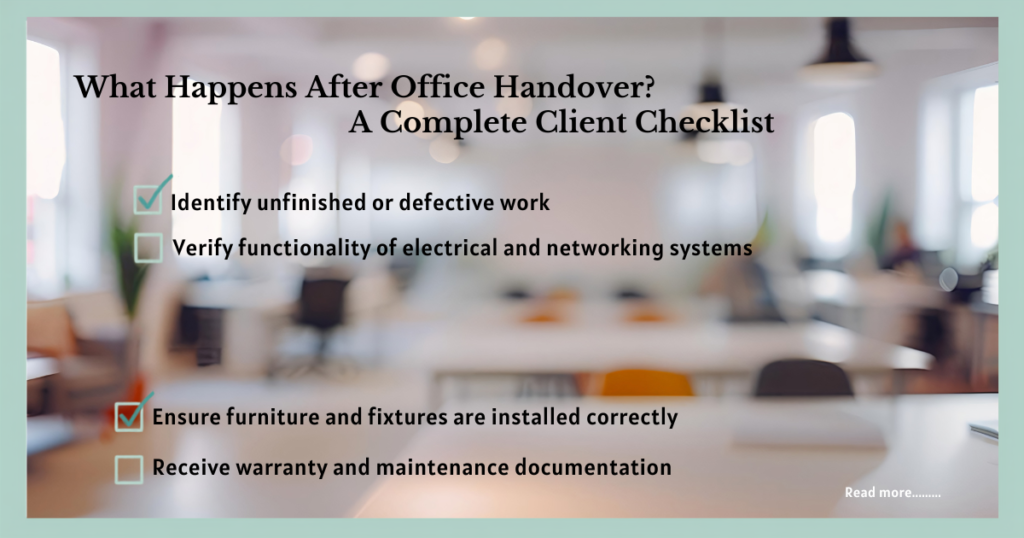
What Happens After Office Handover? A Complete Client Checklist
Completing an office interior project is an exciting milestone. After weeks or months of planning, designing, execution, coordination, and quality checks, the moment of handover marks the official transition of the workspace from the contractor to the client. However, many businesses assume that the project ends the day they receive the keys. In reality, office handover is the beginning of a new operational phase, and the actions taken immediately after handover can significantly impact workplace efficiency, employee comfort, maintenance costs, and long-term asset performance.
A professionally executed handover should include documentation, inspections, testing, warranties, and a clear understanding of how every installed system functions. Whether you have completed a turnkey office fit-out, corporate office renovation, or new workspace setup, following a structured post-handover checklist helps ensure that nothing is overlooked.
At Nine Square Interior, we believe that successful project delivery is not just about beautiful interiors; it is about ensuring that the client can operate the office confidently from day one.
Why the Office Handover Stage Matters
The handover stage is where design intent becomes operational reality. It is the final opportunity to verify that all agreed work has been completed according to specifications.
A thorough handover process helps:
- Identify unfinished or defective work
- Verify functionality of electrical and networking systems
- Ensure furniture and fixtures are installed correctly
- Receive warranty and maintenance documentation
- Train facility teams on system operations
- Reduce future maintenance disputes
- Protect the client’s investment
The Complete Post-Handover Client Checklist
1. Verify the Final Scope of Work
Start by comparing the completed office with the approved drawings, BOQ, and contract documents.
Check the following:
- Number of cabins and meeting rooms
- Workstation count
- Storage units
- Reception area elements
- Branding graphics
- Flooring finishes
- False ceiling layout
- Lighting fixtures
- Washroom accessories
- Pantry installations
Any deviation from the approved scope should be documented immediately.
2. Conduct a Snagging Inspection
Snagging is the process of identifying minor defects or unfinished items before final acceptance.
Common snagging items include:
- Paint touch-ups
- Loose laminate edges
- Misaligned cabinet shutters
- Scratches on glass partitions
- Uneven silicone finishing
- Damaged skirting
- Loose door hardware
- Improperly installed signage
Create a snag list with photographs and expected rectification dates.
3. Test All Electrical Systems
Before employees move in, verify that every electrical point is functioning.
Test:
- Power sockets
- UPS-backed outlets
- Lighting circuits
- Emergency lights
- Switchboards
- DB labeling
- Earthing connections
- Emergency power changeover
Ask for electrical load schedules and circuit diagrams for future maintenance.
4. Validate IT & Networking Infrastructure
Modern offices depend heavily on connectivity.
Confirm that:
- Data points are active
- Patch panels are labeled
- Server racks are installed correctly
- Wi-Fi access point locations are finalized
- Cable management is complete
- Conference room AV connections work properly
- Internet service providers have access to required routes
A network test before occupancy prevents operational disruptions on the first working day.
5. Inspect HVAC Performance
Air conditioning issues are among the most common post-handover complaints.
Check:
- Cooling in all zones
- Airflow from diffusers
- Condensate drainage
- Thermostat functionality
- Noise levels
- Access panels for maintenance
- Filter installation
Request operation manuals and maintenance schedules from the HVAC vendor.
6. Review Furniture & Ergonomics
Furniture should be inspected not only for appearance but also for usability.
Verify:
- Chair height adjustment
- Drawer operation
- Lock functionality
- Cable access grommets
- Stability of workstations
- Meeting room table alignment
- Storage accessibility
Employee comfort directly influences productivity and workplace satisfaction.
7. Collect All Handover Documents
A complete handover file should include:
Store both digital and physical copies securely.
8. Understand Warranty Coverage
Many clients receive warranty documents but never review them.
Clarify:
- Coverage period
- What is included
- What voids the warranty
- Response time for service calls
- Replacement procedures
- Maintenance responsibilities
Different components may have different warranty durations.
9. Create a Preventive Maintenance Plan
A proactive maintenance schedule reduces repair costs and extends asset life.
Recommended activities:
Monthly
- Furniture inspection
- Cleaning review
- Pantry fittings
- Washroom accessories
Quarterly
- HVAC servicing
- Electrical tightening checks
- Network rack maintenance
- Door hardware lubrication
Semi-Annual
- Paint touch-ups
- Ceiling inspection
- Sealant review
Annual
- Complete safety audit
- Fire system testing
- Asset condition assessment
10. Prepare Employees for Move-In
Before occupancy:
- Assign seating plans
- Label storage units
- Configure access cards
- Test printers and shared devices
- Stock pantry supplies
- Provide evacuation maps
- Conduct a workplace orientation
A smooth move-in creates a positive first impression of the new office.
Common Issues Found After Office Handover
Even well-executed projects may reveal minor issues during initial usage.
Typical observations include:
- Flickering lights
- Loose handles
- Network connectivity gaps
- AC balancing requirements
- Drawer alignment issues
- Glass door adjustments
- Paint touch-up requirements
This is why most professional projects include a defect liability period after handover.
A Simple Office Handover Acceptance Checklist
- All agreed work completed
- Snagging items recorded
- Electrical systems tested
- Network points active
- HVAC functioning properly
- Furniture inspected
- Washrooms operational
- Pantry ready for use
- Branding installed
- Safety equipment available
- As-built drawings received
- Warranty documents received
- Vendor contacts shared
- Maintenance schedule approved
- Final cleaning completed
Why Professional Handover Support Matters
An office interior project represents a significant business investment. The quality of the handover process determines how quickly that investment begins delivering value.
At Nine Square Interior, our handover process includes detailed inspections, documentation support, system verification, snag resolution, and post-completion assistance to ensure clients can transition into their new workspace with confidence.
Whether you are moving into a startup office, corporate headquarters, branch office, or renovated workspace, a structured post-handover checklist helps protect your investment and ensures operational readiness from day one.
Ready for a Hassle-Free Office Handover?
If you are planning a new office fit-out, workplace renovation, or corporate interior project, our team can help you manage the entire process from design and execution to final handover and post-occupancy support.
Connect with Nine Square Interior today for a free consultation and build a workspace that is not only beautifully designed but also fully ready for business operations.